


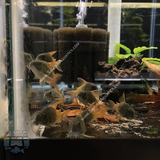
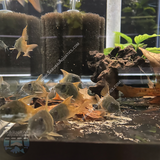
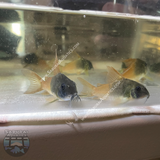
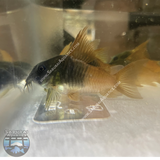
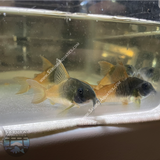
Rio Tomo Concolor Cory - Hoplisoma sp. CW217
Common Name: CW217 Cory, Rio Tomo Cory, Rio Tomo Concolor Cory, Night and Day Cory
Scientific Name: Hoplisoma sp. CW217
Native Region: Venezuela, State of Bolivar, in a clear water tributary to the Rio Tomo. Colombia, Rio Meta basin.
Origin: Tank Raised - USA
Adult Size: 2-2.5"
Temperament: Peaceful
Diet: Omnivore / Benthic Micro-omnivore. Currently feeding on a mix of live baby brine shrimp, EBO Youngster Booster, EBO Artemia Softgran, EBO Insect Softgran, and EBO Seafood Softgran
Swimming Level: Bottom
Recommended Group: 6+
The Rio Tomo Cory (Hoplisoma sp. CW217) is a rare and highly sought-after undescribed Corydoradinae from the Rio Tomo region of Colombia. Closely associated with Hoplisoma concolor, CW217 is distinguished by its attractive dark charcoal head and sharp contrasting orange back half. This understated beauty is particularly impressive under subdued lighting, where its natural coloration really comes to life.
CW217 is currently known only by its CW number, a designation used by Corydoras enthusiasts to identify undescribed or scientifically unresolved forms. While it bears a strong resemblance to H. concolor, CW217 is considered a distinct form in the aquarium trade, and its formal scientific status remains unresolved.
Like other Corydoras, CW217 is a peaceful, social bottom-dweller that spends much of its time exploring the substrate in search of food. They are best kept in groups where they feel secure and can display their natural social behavior. A mature aquarium with plenty of open sand, driftwood, leaf litter, and shaded areas makes an excellent environment for this species.
Care Requirements
Temperature: 72–78°F
pH: 6.0–7.5
Tank Size: 20 gallons or larger
Water: Soft to moderately soft
Group Size: 6 or more
CW217 Corydoras are omnivorous bottom feeders and readily accept a varied diet of quality sinking pellets, wafers, and granules. Frozen and live foods such as bloodworms, daphnia, brine shrimp, and other small aquatic foods are excellent additions to their diet and can be especially useful for conditioning wild specimens.
A soft, fine-grained sand substrate is strongly recommended. Corydoras constantly sift through the substrate with their sensitive barbels while foraging, and coarse or sharp gravel can cause damage over time. Driftwood, roots, leaf litter, and areas of cover will help create a natural environment while giving the fish places to retreat when they want to feel secure.
Their peaceful temperament makes CW217 an excellent choice for a community aquarium. They can be kept with small to medium peaceful tetras, rasboras, danios, pencilfish, and other calm South American community fish. Avoid aggressive or overly boisterous tankmates that may compete with them for food or cause unnecessary stress.
Difficulty: Easy to Moderate
Breeding: Add leaves to the tank. Females will place eggs in high flow areas or under the leaves. Hatching eggs can be tricky, but many people have success with antifungal treatments, such as methylene blue and alder cones.
Why We Like Them
- Rare and highly desirable CW-number Corydoras
- Striking two-toned coloration
- Peaceful and social bottom-dweller
- Excellent choice for natural-style aquariums
- Fascinating undescribed species for Corydoras collectors
- Wild form from the Rio Tomo region of Colombia
All livestock is carefully quarantined and monitored before being offered for sale at Saburai Aquatics.