


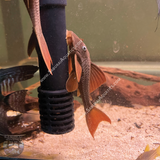
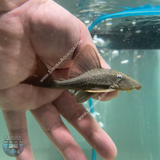
L137 “Blue Eye Red Fin Pleco”
Common Name: Blue Eye Red Fin Pleco / L137
Scientific Name: Hypostomus soniae
Native Region: Brazil – Rio Tapajós Basin, Pará
Origin: Wild Caught
Adult Size: Approximately 8"
Temperament: Peaceful / Semi-territorial
Diet: Herbivore / Wood Grazer
Currently Feeding On: EBO Spirulina Tabs, EBO Spirulina Softgran, EBO Mussel Sticks
Swimming Level: Bottom
Recommended Group: 1+
The L137 Blue Eye Red Fin Pleco is one of the most distinctive large Hypostomus available to pleco enthusiasts. Its combination of brilliant blue eyes, warm brown to gray body coloration, and orange-red to rusty red fins gives this species an unmistakable appearance. The intensity of the red coloration can vary between individuals, making each fish unique.
Native to the Rio Tapajós basin in Pará, Brazil, Hypostomus soniae is associated with clear-water environments including sections and temporary pools of the Tapajós. Its robust, heavily armored body and specialized spoon-shaped teeth are characteristic of the Hypostomus cochliodon group. In the aquarium, driftwood is an important part of their environment, providing grazing surfaces, shelter, and natural organic material.
L137 are generally peaceful toward appropriately sized tankmates but can become territorial with other large bottom-dwelling plecos. They are best kept with plenty of space, driftwood, caves, and visual barriers. Although they can be maintained individually, small groups can work in sufficiently large aquariums when adequate territory is provided.
Care Requirements
Temperature: 75–82°F
pH: 6.0–7.5
Tank Size: 120 gallons+
Water: Clean, well-oxygenated, soft to moderately hard
Group Size: 1+
L137 requires a spacious, mature aquarium because of its eventual size and substantial body mass. Excellent filtration and good oxygenation are important, particularly in warmer water. Provide sturdy driftwood, smooth rocks, caves, and other secure hiding places. Decor should be firmly positioned, as large Hypostomus can be surprisingly powerful and may move or disturb unsecured objects.
This species belongs to the wood-grazing Hypostomus lineage and should have continual access to aquarium-safe driftwood. However, wood should complement rather than replace a varied diet. Quality spirulina and algae-based foods, sinking herbivore wafers, vegetables, and other plant-based foods should make up the majority of their regular diet.
Blanched zucchini, cucumber, squash, spinach, and other suitable vegetables can be offered regularly. Algae and natural biofilm are valuable supplemental food sources in a mature aquarium, but should not be relied upon as the sole source of nutrition. Occasional supplemental foods can also be offered, particularly to wild-caught specimens that are still adapting to aquarium feeding.
L137 can make an excellent centerpiece pleco for a large South American community aquarium. Suitable tankmates include larger peaceful tetras, larger Corydoras and Brochis, peaceful cichlids, and other robust community fish that appreciate similar water conditions. Avoid housing them with aggressive species or multiple large territorial plecos unless the aquarium provides substantial territory.
Difficulty: Moderate
Breeding: Cave Spawner
L137 belongs to a group of Hypostomus that uses caves and sheltered areas for reproduction. Mature males develop stronger odontodal growth and defend suitable spawning sites. Breeding in captivity is possible but requires a large, mature aquarium with excellent water quality and appropriately sized caves.
Why We Like Them
-
Striking electric-blue eyes
-
Beautiful orange-red to rusty red fins
-
Uncommon Brazilian L-number pleco
-
Excellent algae and biofilm grazer
-
Specialized wood-grazing dentition
-
Impressive large-bodied Hypostomus
-
Peaceful with appropriately sized community fish
-
Outstanding centerpiece pleco for a large Amazonian or Tapajós-style aquarium
All livestock is carefully quarantined and monitored before being offered for sale at Saburai Aquatics.